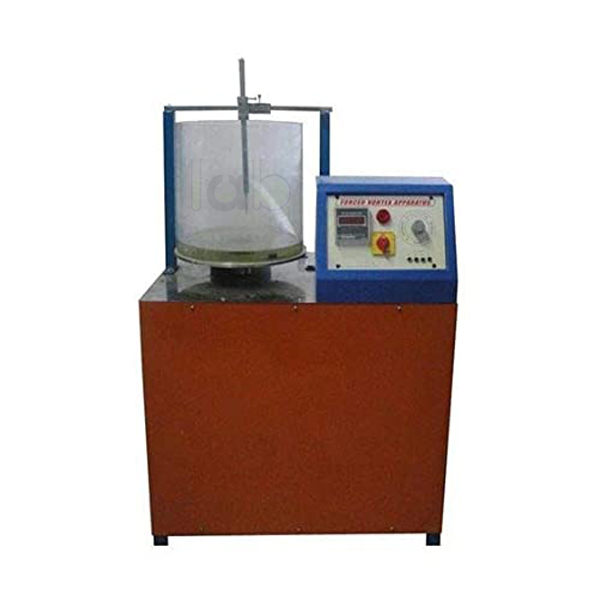
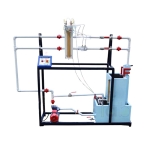
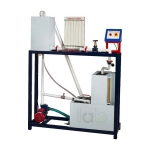
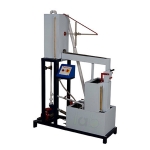
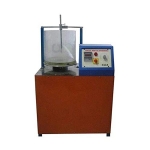
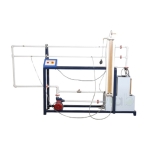
Quick Answer: Free Force Vortex Apparatus is used to plot the surface profiles of free and forced vortices, with a 200 mm (approx.) dia acrylic cylinder and an overflow point at a height of 150 mm. Four circumferential jets near the bottom form the free vortex, and a variable speed motor rotates the cylinder for the forced vortex.
Last updated: October 2026
Key Features
Transparent acrylic cylinder, dia 200 mm approx
Height of overflow point 150 mm
Four circumferential jets near the bottom to form a free vortex
Orifice with reducing bush so a reduced diameter can be investigated
FHP variable speed motor with V belt to rotate the cylinder for a forced vortex
Technical Specifications
Specification
Value
Cylinder
Acrylic, dia 200 mm approx
Height of overflow point
150 mm
Drive
FHP variable speed motor, V belt
About This Product
Once the flow reaches a steady state, students measure the coordinates of the free surface, which represents the variation of the sum of pressure and datum head. Running first with the jets and then with the cylinder rotated about its vertical axis gives both vortex types in one FLUID MECHANICS LAB apparatus.
Frequently Asked Questions
Q1. How is the forced vortex produced? The plate is rotated by a variable speed motor through a V belt, so the cylinder turns about its vertical axis and a forced vortex forms.
Q2. What does the reducing bush do? The orifice is a reducing bush, so a reduced orifice diameter can be investigated.