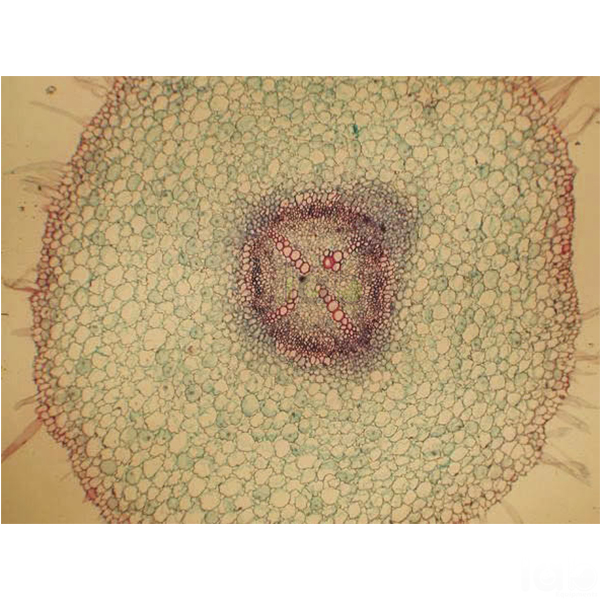
Quick Answer: Basic Plant Anatomy Slide is a set of 20 glass microscope slides showing the major aspects of vascular plant structure, with stem, root, leaf, flower and seed preparations in TS, LS and RLS.
Last updated: October 2026
Key Features
20 glass microscope slides
Stem sections of Cucurbita, Helianthus, Zea and Tilia, including young and old stems
Root sections of Vicia and Helianthus, including a Vicia root apex LS
Lilium ovary and anther, stigma with pollen tubes, and pollen grains
Capsella mature cotyledon stage LS and Zea seed LS
Leaf sections of Ammophila (marram grass) and Prunus (cherry), plus monocot epidermis for stomata
Technical Specifications
Specimen
Preparation
Dicot
Stem apex LS
Cucurbita (marrow)
Stem TS and LS
Helianthus
Stem, bundles TS
Vicia
Root apex LS
Monocot
Epidermis, for stomata E
Zea (maize)
Stem TS and LS
Tilia
Old stem RLS
Lilium
Ovary TS and LS
Helianthus
Old stem TS and LS
Lilium
Anther TS
Helianthus (sunflower)
Young and old root TS
Capsella
Mature cotyledon stage LS
Tilia (lime)
Young and old stem TS
Zea
Seed LS
Lilium
Ovary, various stages TS
Ammophila (marram grass)
Leaf TS
Stigma
With pollen tubes
Pollen grains
—
Vicia (bean)
Young root TS
Prunus (cherry)
Leaf TS
About This Product
Vascular plant structure is the theme of these 20 prepared microscope slides, which compare stems, roots and leaves of monocots and dicots, including young and old stages of Helianthus and Tilia and an RLS of old Tilia stem. Reproductive structures in this Biology Lab Equipment set include the Lilium ovary at various stages, the Lilium anther, a stigma with pollen tubes, pollen grains and the Capsella mature cotyledon stage.
Frequently Asked Questions
Q1. How many slides does the Basic Plant Anatomy Slide set contain? It contains 20 glass microscope slides showing the major aspects of vascular plant structure.
Q2. Which slide shows stomata? The monocot epidermis slide (E) is included for stomata.