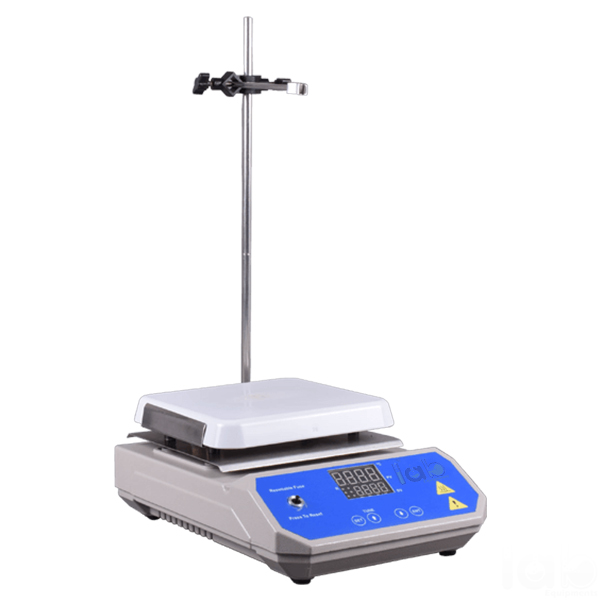
Quick Answer: Laboratory Advanced Ceramic Hot Plate has a glass ceramic top plate with chemical resistance against strong acids and bases, PID temperature control and a maximum temperature of 380°C, with a 1 kW rating.
Last updated: October 2026
Key Features
Glass ceramic top plate resistant to strong acids and bases
Die-cast aluminum body with anti-corrosion coating
PID temperature control reaches the set temperature quickly with enhanced accuracy
Maximum temperature 380°C
Input rating 110V AC / 60 Hz or 220V AC / 50 Hz
Rating 1 kW
Technical Specifications
Specification
Value
Max. temperature
380°C
Top plate
Glass ceramic
Body
Die-cast aluminum, anti-corrosion coating
Control
PID
Input rating
110V AC / 60 Hz, 220V AC / 50 Hz
Rating
1 kW
About This Product
The glass ceramic top plate gives this laboratory hot plate chemical resistance against strong acids and bases, and the die-cast aluminum body is finished with an anti-corrosion coating. PID temperature technology brings the plate to the set temperature quickly with enhanced accuracy, up to 380°C. Rated 1 kW, it sits among the Hot Plates as a ceramic-topped unit listed for 110V AC / 60 Hz and 220V AC / 50 Hz input.
Frequently Asked Questions
Q1. What is the top plate of the Laboratory Advanced Ceramic Hot Plate made of? Glass ceramic, which offers chemical resistance against strong acids and bases.
Q2. How hot does it get? The maximum temperature is 380°C, with PID temperature control.
Lab Equipments Ambala packs and ships export orders for buyers in Belize, Burundi, Mozambique and the Solomon Islands.