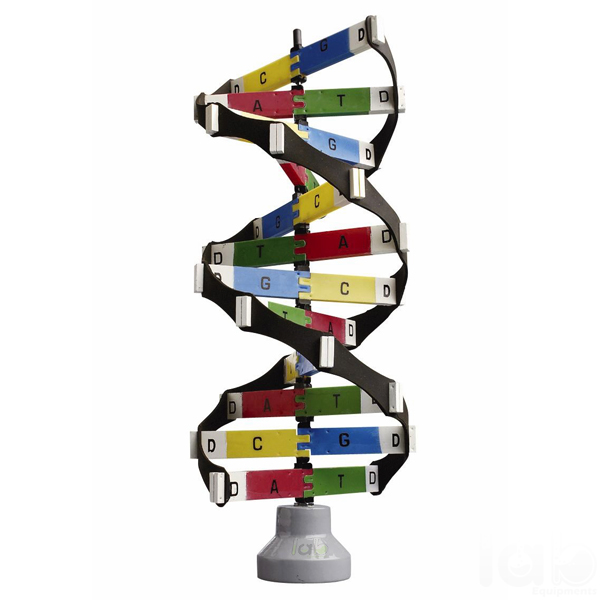
Quick Answer: DNA Activity Model is a build-it-yourself double helix in which students assemble colour-coded cytosine, adenine, guanine and thymine bases, phosphate strands and a centre rod on a metal base, then unzip it to show DNA replication.
Last updated: October 2026
Key Features
Cytosine, adenine, guanine and thymine nucleic acid bases
Connecting phosphate strands and a centre rod representing hydrogen bonds
Colour-coded parts with specially shaped ends for proper base-pair alignment
Can be unzipped to demonstrate DNA replication
Metal base for easy rotation and classroom display
Three-dimensional model made of plastic components
Technical Specifications
Specification
Value
Model type
Three-dimensional double helix, student-assembled
Bases
Cytosine, adenine, guanine and thymine
Components
Plastic, colour-coded with shaped ends
Base
Metal, rotates for display
About This Product
As a hands-on Biology Lab Equipment activity, students build the double helix themselves and see how the specially shaped, colour-coded ends line up each base pair between the two phosphate strands. Once assembled, the model can be unzipped to show replication and turned on its metal base for classroom display.
Frequently Asked Questions
Q1. Which bases are included in the DNA Activity Model? It includes cytosine, adenine, guanine and thymine nucleic acid bases, with connecting phosphate strands and a centre rod representing hydrogen bonds.
Q2. Can the DNA Activity Model show DNA replication? Yes. The colour-coded parts can be unzipped to demonstrate DNA replication.