Quick Answer: Shunt Type Resistance Testing Instrument is a low-voltage laboratory apparatus for resistance testing, shunt checks and current-division demonstrations in meter circuits.
Last updated: October 2026
Key Features
Built-in shunt or resistance element with test terminals
Demonstrates how a shunt extends the range of an ammeter
Shows current division between a meter and a low-resistance parallel path
For low-voltage circuits, with test current kept within the rating
About This Product
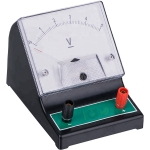
A shunt is a low-resistance path placed in parallel with a meter to bypass part of the current, and this instrument lets students see that effect in ammeter range-extension, current-division and Ohm's law practicals. It is used with Lab Meters such as an ammeter or voltmeter where the design requires, and also suits Wheatstone bridge and meter bridge work on physics lab equipment benches.
Frequently Asked Questions
Q1. What is a shunt resistance? A shunt resistance is a low-resistance path connected in parallel with a meter or circuit branch to bypass part of the current. It is commonly used to extend ammeter range or protect a meter movement.

 (1).png)

.jpg)

.jpg)


 (1).png)