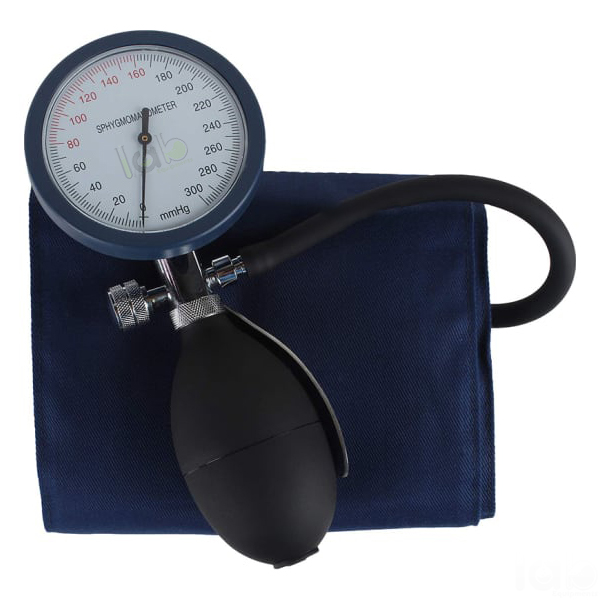
Quick Answer: Sphygmomanometer Adult Aneroid measures arterial blood pressure non-invasively through a cuff on the patient's arm, read on a needle gauge graduated 0-300 mmHg in 2 mmHg increments with ± 3 mmHg accuracy.
Last updated: October 2026
Key Features
Inflation bulb with integrated manometer needle gauge and pressure release valve
Washable, one-size adult cloth cuff with hook-and-loop fastening, reinforced at both ends
Latex-free and mercury-free
Tube length 50-80 cm with universal quick connector
Gauge body allows recalibration but stays sealed in normal use
Technical Specifications
Specification
Value
Gauge range
0-300 mmHg (min)
Increments
2 mmHg (max)
Accuracy
+/- 3 mmHg
Cuff
Washable, one-size-fits-all adult cloth cuff, reinforced at both ends
Tube length
50-80 cm
Connector
Universal quick connector
Operating conditions
10°C to 40°C at 85 % relative air humidity (non-condensing)
Storage conditions
5 °C to 50 °C at 85 % relative air humidity (non-condensing)
Estimated weight
0.494 kg
Estimated volume
0.0136 m3
Other
Latex-free, mercury-free
About This Product
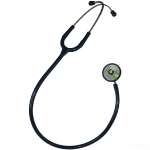
The cloth cuff is wrapped around the patient's arm and inflated with the flexible bulb, and the needle gauge shows the cuff pressure. Systolic and diastolic values are usually found by listening for Korotkoff sounds with a stethoscope at the same time, so this Medical Diagnostic Equipment item is used together with one. The gauge body can be recalibrated, yet stays sealed and secure in normal operation.
Frequently Asked Questions
Q1. What is the gauge range of the aneroid sphygmomanometer? The gauge is graduated 0-300 mmHg in 2 mmHg increments, with ± 3 mmHg accuracy and a pressure release valve.
Q2. Is the sphygmomanometer latex-free? Yes. It is latex-free and mercury-free.
Q3. Is a stethoscope needed with it? Systolic and diastolic pressure are usually assessed by listening to Korotkoff sounds with a stethoscope at the same time.