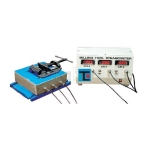
Slip Creep Measurement Apparatus
Product Code : EL-TOML-11028
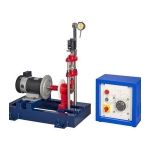
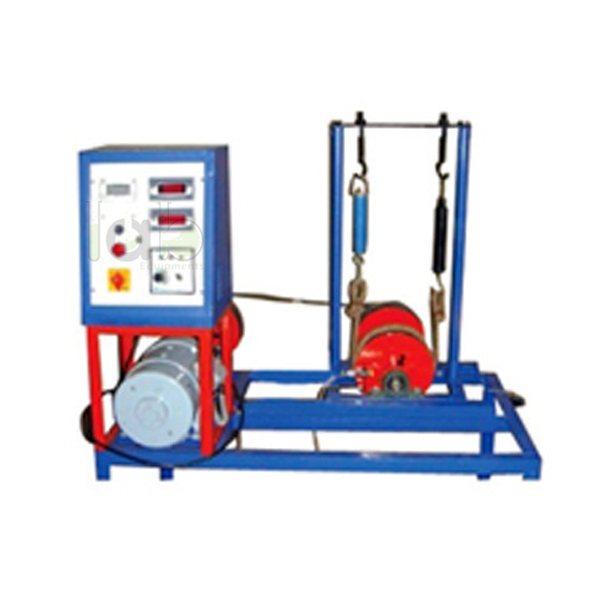
Quick Answer: Slip Creep Measurement Apparatus is a belt-drive test rig with a variable speed 1 HP, 1500 RPM D.C. motor, equal-diameter driving and driven pulleys and a brake drum with spring balance. It measures friction, power transmitted, slip and creep with fabric, canvas and rubber flat belts.
Last updated: October 2026
Key Features
- Variable speed D.C. motor, 1 HP, 1500 RPM, speed varied by dimmerstat
- Driving and driven pulleys of equal diameter on the motor shaft and output shaft
- Flat belts of fixed length in fabric, canvas and rubber
- Driven pulley slides on the base with a bearing block to change initial belt tension
- Brake drum with spring balance on the output shaft to measure power output
- Two channel digital RPM indicator and stroboscope
Technical Specifications
| Specification | Value |
|---|---|
| Motor | D.C., 1 HP, 1500 RPM, variable speed |
| Pulleys | Driving and driven, equal diameters |
| Belts | Flat, fixed length: fabric, canvas, rubber |
| Loading | Brake drum with spring balance |
| Speed measurement | Two channel digital RPM indicator; stroboscope |
| Other | Belt tightening arrangement; speed controller unit |
| Supply | 230 V A.C. stabilised |
| Space | 1.5 m x 1.5 m |
About This Product
Students fit one of the three belts, set the initial tension by sliding the driven pulley on its bearing block, and then load the brake drum while the two channel RPM indicator reads both pulley speeds. These readings give the coefficient of friction between pulley and belt materials, the tension characteristics (T1 – T2) and the slip characteristics, from which the creep zone is found. For colleges equipping a THEORY OF MACHINE LAB with engineering educational equipments in India, the rig also measures belt slip speed and its limiting value when slip just starts.
Frequently Asked Questions
Q1. Which belt materials can be tested?
Three flat belts of fixed length are supplied: fabric, canvas and rubber. The coefficient of friction between the pulley material and each belt material can be measured.
Q2. How is the initial belt tension changed?
The driven pulley slides on the base with its bearing block, which changes the initial tension in the belt. A belt tightening arrangement is also provided.
Q3. Which graphs can students plot?
Tension characteristics, from (T1 – T2) and power transmitted at varied belt tensions, and slip characteristics, from (T1-T2) against percentage slip, which also locates the creep zone.
Export orders from Lab Equipments Ambala have gone to buyers in Costa Rica, Djibouti and Honduras, among other markets.
For a quotation on the Slip Creep Measurement Apparatus, contact Lab Equipments Ambala.
 (1).png)