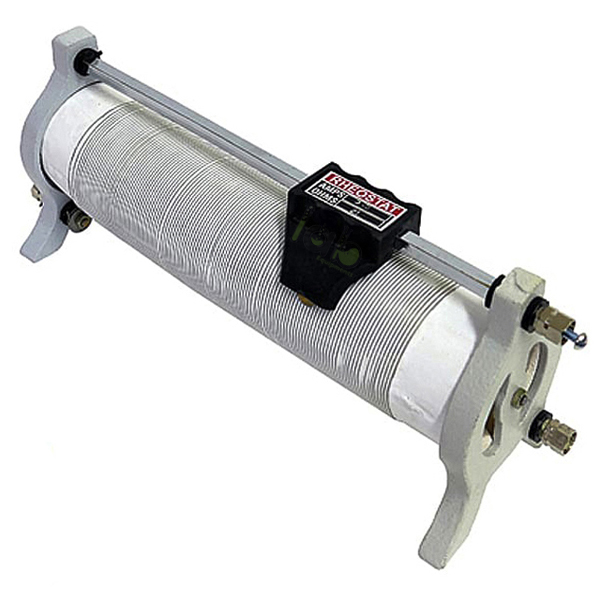
Quick Answer: Rheostat Constantine (Eureka) Wire is a sliding rheostat wound with electrically oxidised Eureka wire on a porcelain pipe, with three brass terminals so it can serve as a variable resistance or a potential divider. It is made in current ratings of 0.6 to 8 amperes.
Last updated: October 2026
Key Features
Layers of electrically oxidised Constantine (Eureka) wire on an insulated, heat-resistant porcelain pipe
Phosphor-bronze sliders with a double contact system
Heavy brass block for smooth slider movement
Bakelite or aluminium moulded supports, tightened with rod and nuts
Three brass terminals: one to the slider, two to the winding ends
Current ratings from 0.6 to 8 amperes
Technical Specifications
Specification
Value
Winding
Electrically oxidised Constantine (Eureka) wire
Former
Insulated, heat-resistant special porcelain pipe
Slider contact
Phosphor-bronze, double contact
Supports
Bakelite or aluminium moulded
Terminals
Three, brass
Current rating
0.6 to 8 amperes
About This Product
With one terminal on the sliding contact and two on the ends of the winding, this rheostat can be wired as a variable resistance or as a potential divider for general laboratory work in the Electrical And Electronics range. The winding sits on a porcelain pipe for good heat dissipation, and the sliders run smoothly on a guide rod with a double contact system.
Frequently Asked Questions
Q1. Can this rheostat be used as a potential divider? Yes. One terminal connects to the sliding contact and the other two to the ends of the winding, so it works as a variable resistance or a potential divider.
Q2. What current ratings are available? It is made in a variety of resistances with current ratings from 0.6 amperes to 8 amperes.
Lab Equipments Ambala exports to schools, colleges and distributors in countries such as Antigua and Barbuda, Qatar, Uganda and the Gambia.

.jpg)
 (1).png)

.jpg)
 (1).png)
.png)
.png)
