
Crookes Radiometer
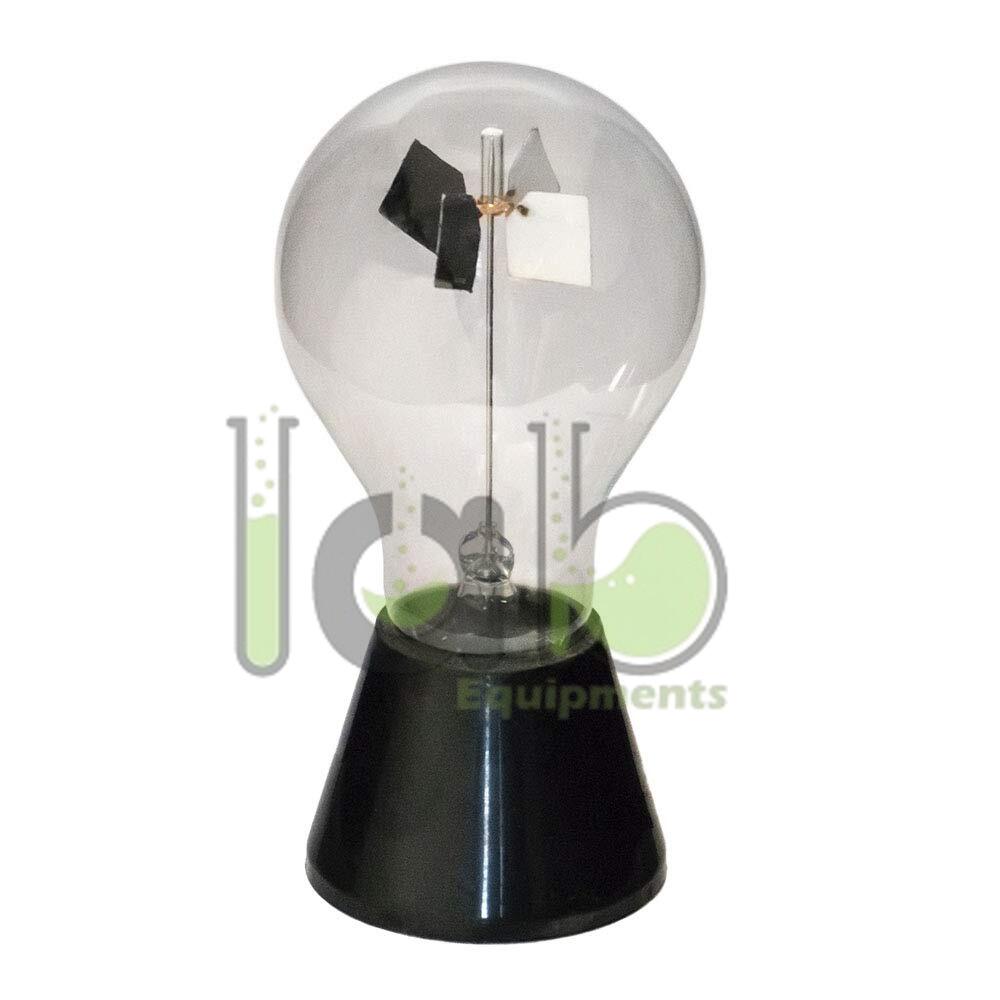
Product Code : SCL-PMP-11148
Quick Answer: Crookes Radiometer is a partially evacuated glass bulb containing lightweight vanes on a spindle; in sunlight or bright light the vanes rotate, demonstrating the effect of radiant energy.
Last updated: October 2026
Key Features
- Low-pressure glass bulb with a rotating vane assembly on a spindle support
- Vanes have black and light reflective surfaces
- Works in sunlight or under a bright light source; no electricity needed
- Different light intensities can be used to compare the speed of vane rotation
- Delicate glass bulb: handle with care
Technical Specifications
| Specification | Value |
|---|---|
| Product type | Physics radiation demonstration instrument |
| Material | Glass bulb, lightweight vane assembly, spindle support |
| Components | Transparent bulb, rotating vanes, black and light reflective surfaces |
| Operation | Observation under sunlight or bright light source |
| Usage level | Secondary to undergraduate physics |
About This Product
Placed on a stable surface and exposed to sunlight or a bright light, the radiometer gives a class a direct view of light-induced motion, which teachers use to discuss radiant energy, heat absorption and low-pressure gas behaviour. Comparing vane speed under different light intensities turns this Physics Miscellaneous Products demonstration into a simple investigation.
Frequently Asked Questions
Q1. Does the Crookes Radiometer need electricity?
No. It works through exposure to sunlight or another bright light source.
Q2. What happens when the radiometer is placed in light?
The vane assembly inside the low-pressure bulb begins to rotate, and the rotation speed changes with light intensity.
Questions about the Crookes Radiometer? Write to Lab Equipments Ambala.
.png)

.png)


.jpeg)

.jpg)